Skip to content
Graham MercerThe Honest Bread Counter

A retired baker's bread shelf

I’ll show you how to make ordinary flour behave

I’ll take you from ordinary flour to a crackling loaf, then show you how to read labels, fermentation and the responsible step when a bake goes wrong.

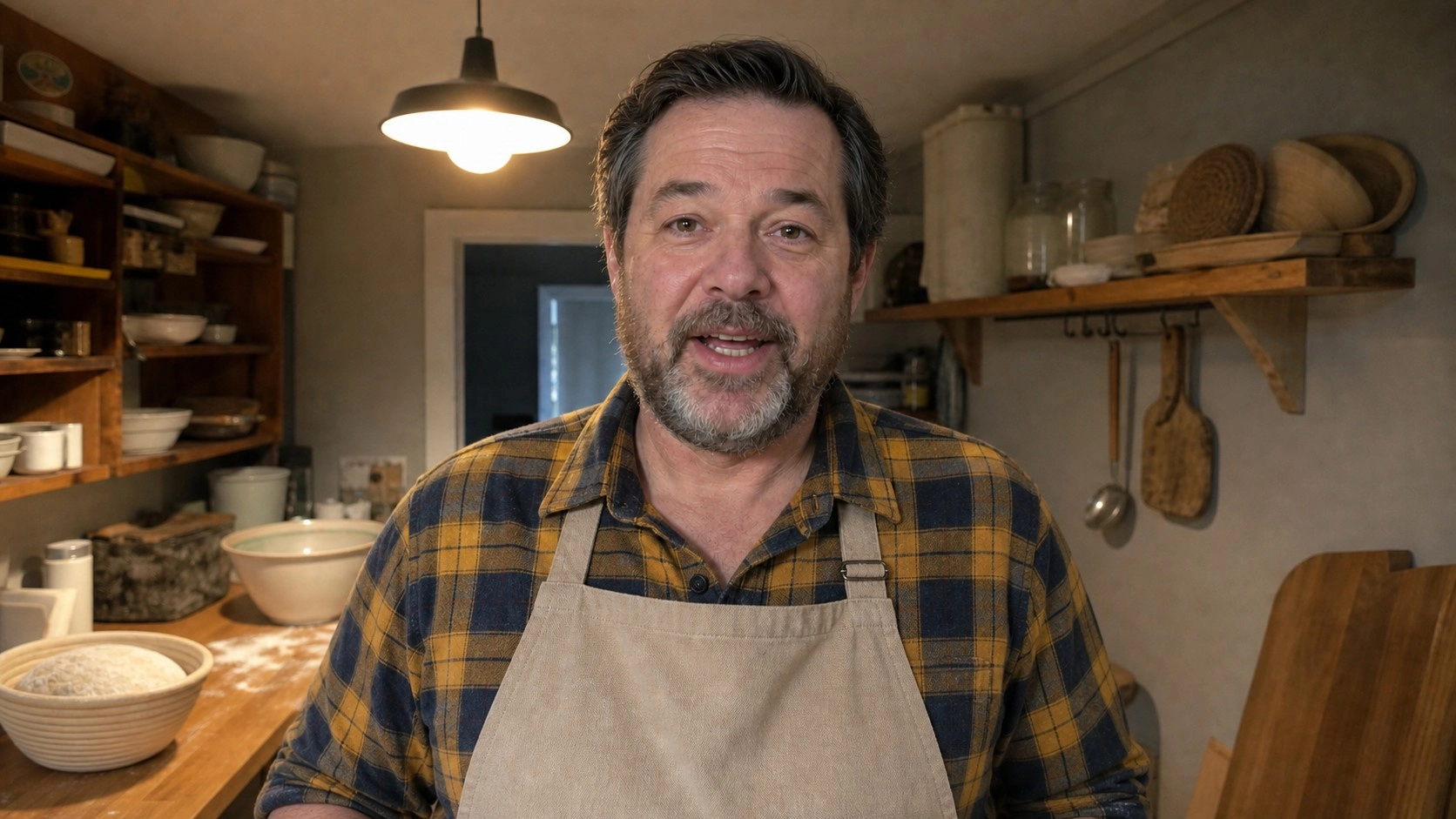
Sound on — Graham Mercer explains everything in 3 minutes

Press play with sound on; Graham will show you where to start, what to watch in the dough and which book carries the next step.

Instant PDF download. 7-day money-back guarantee, no questions asked.

3PDF ebooks
249pages
$27one payment, no subscription
7 daysmoney back, keep the files

The Honest Bread Counter

The loaf is giving you clues

A dough can tell you what happened, but only if you look at the bag, the rise, the crumb and the clock together. Graham's method replaces blame with one responsible step to check next.

  • The bag says all-purpose, the dough says otherwise, and the loaf comes out tight because the protein number was never checked.
  • You add 8 grams of yeast for speed, miss the narrow proofing window, and end up with a loaf that smells strongly of yeast or collapses.
  • A sourdough jar rises once, fails the float test, or peaks while you are out; an age-based routine gives you no useful next step.
  • A packaged loaf says multigrain or sourdough, but the back panel, net weight and shelf life tell a different story.

What the shelf costs you

The loaf you buy costs more than the loaf you bake. Every week, forever.

A bag of flour, water, salt and yeast is a few cents of honest things. Everything above that is somebody else's hour and somebody else's packaging.

  • A bakery sourdough, once a weekevery week, forever
  • A bread machine bought to solve a problem the dough did not havea cupboard shelf
  • Specialty flour and gadgets bought because a recipe said soand mostly unused
  • A loaf from ordinary supermarket flour, made at homeThe $2 Loaf
  • All three books, read on your phone tonight$27

The first book is called The $2 Loaf because that is what the ingredients cost. The books pay for themselves somewhere in the second month.

The responsible step. When a loaf goes wrong there is always one step that was responsible — the water temperature, the protein number on the bag, the proofing window, the rest before slicing. These books teach you to find it instead of blaming yourself.

The books

The Honest Bread Counter

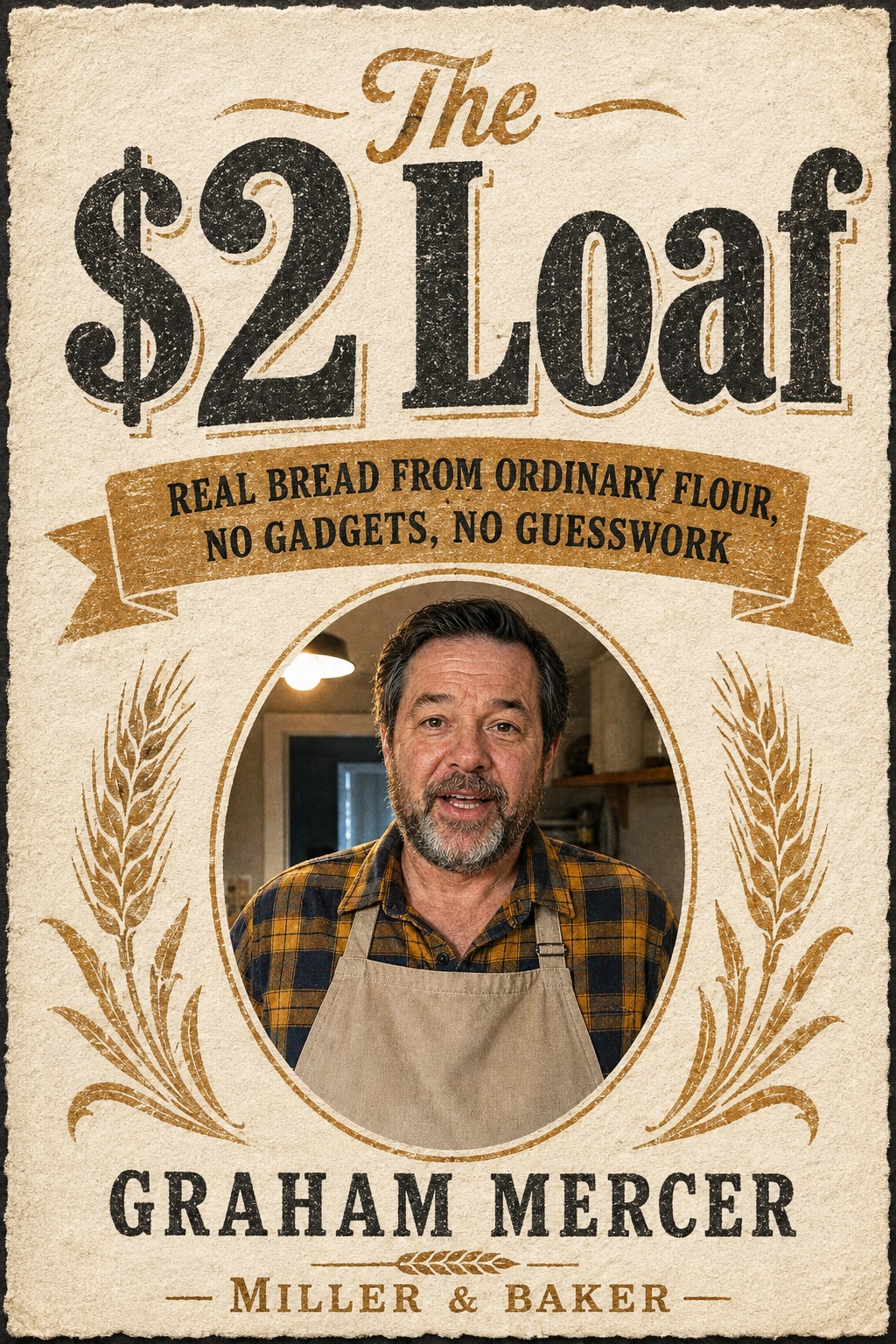
The $2 Loaf: Real Bread From Ordinary Flour, No Gadgets, No Guesswork

The books / 01

The $2 Loaf: Real Bread From Ordinary Flour, No Gadgets, No Guesswork

The Ordinary Flour Bread Handbook

A small yeast dose is an invitation to give the dough time; judge readiness by feel and visible rise instead of obeying a rigid recipe clock.

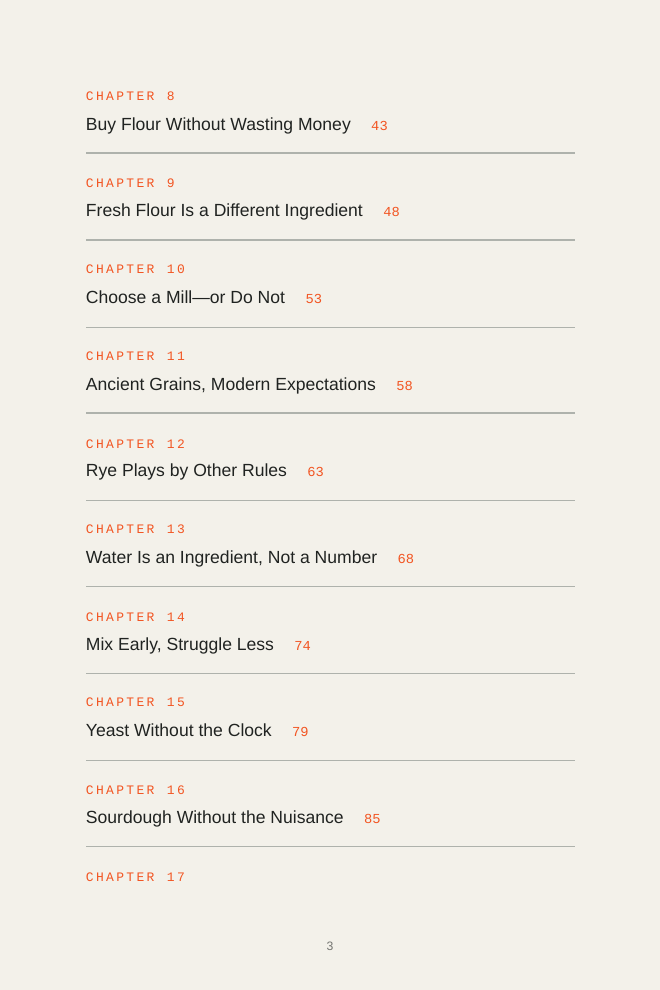
This is the starting book for a baker who wants a dependable loaf from the flour already in the cupboard. “Four Ingredients, One Honest Loaf” gives the base formula—500 grams flour, 350 grams water, 10 grams salt and 2 grams instant yeast—then “Flour Is Not a Label” teaches you to choose by protein rather than the words on the front. “Read the Dough Before the Clock” covers the poke, windowpane and jiggle tests. From there, Graham shapes one dough into rolls, baguette, boule, focaccia and a tin loaf, then handles steam, cooling, freezing and faults such as gummy crumb, spreading and pale crust. It is a practical 93-page PDF, without a machine or starter.

Selected chapters

  1. Four Ingredients, One Honest Loaf
  2. Flour Is Not a Label
  3. Yeast, Salt, and Water
  4. Read the Dough Before the Clock
  5. Bread Takes Time, Not Your Day
  6. Shape the Dough You Have
  7. Heat, Steam, and Crackle
  8. One Dough, Many Sunday Rolls
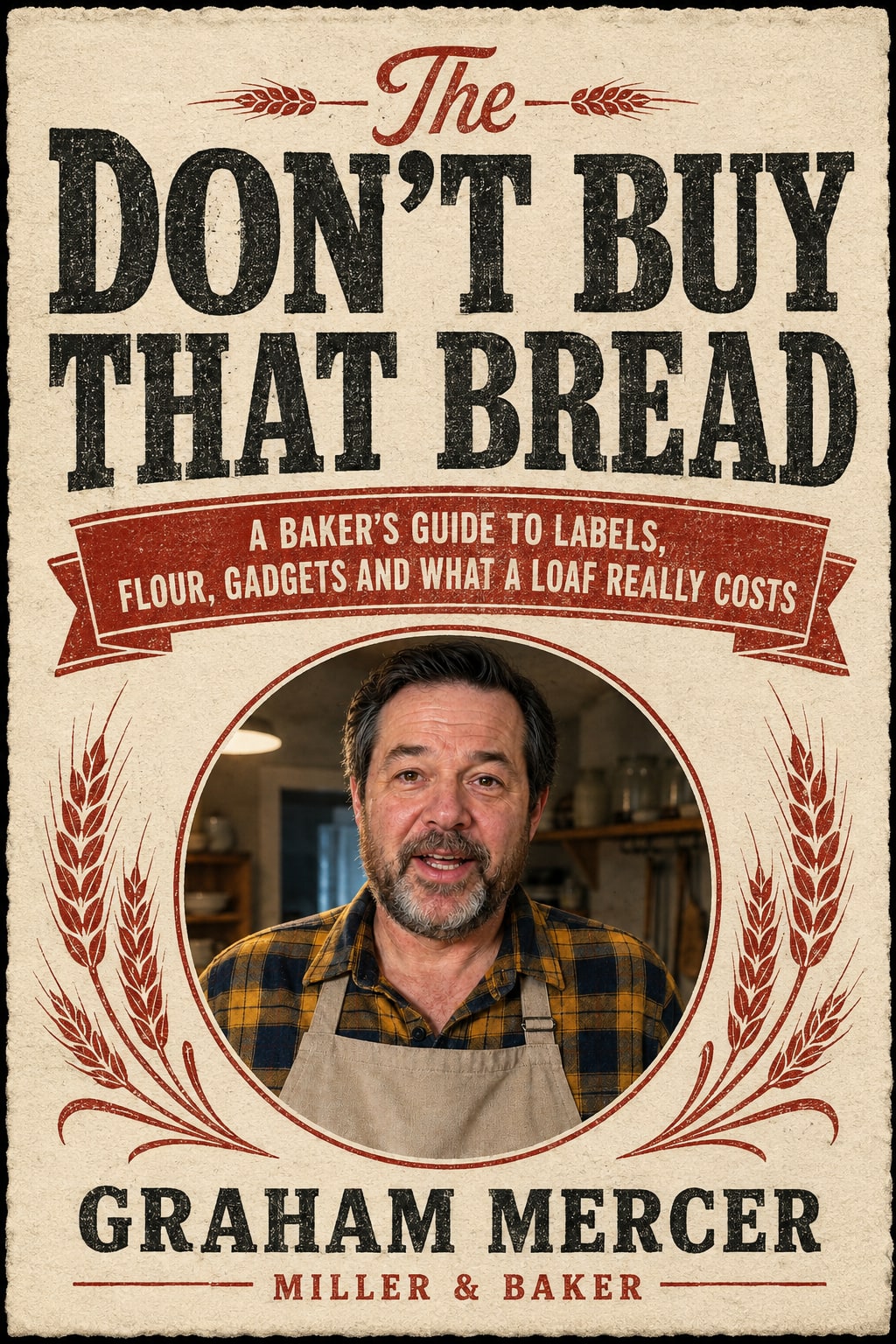
Don't Buy That Bread: A Baker's Guide to Labels, Flour, Gadgets and What a Loaf Really Costs

The books / 02

Don't Buy That Bread: A Baker's Guide to Labels, Flour, Gadgets and What a Loaf Really Costs

The Evidence-First Bread Buying Handbook

Read the claim, ingredient list and net weight in that order; then decide whether the extra flour, labor or gadget earns its place.

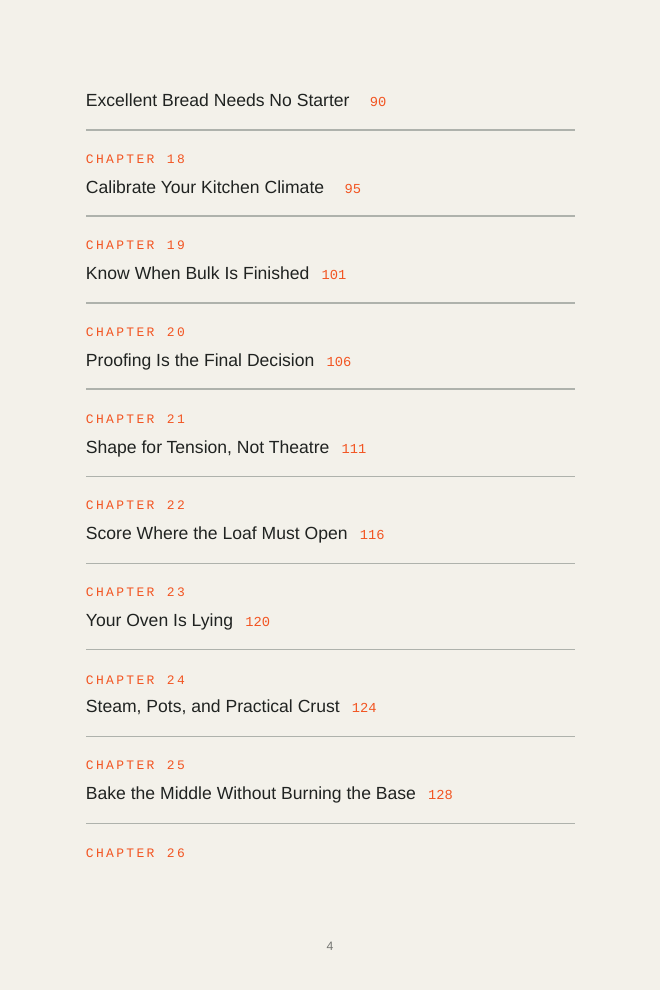
This is the shopping-side book: a 96-page PDF for anyone who wants to know what a loaf's label, flour and price are actually saying. “The Price Is on the Front” gives a one-minute method—separate the package claim, ingredient list and net weight—while “Sixty Seconds on the Back” applies a five-or-fewer recognizable-ingredient rule. “The Flour Ledger” compares protein, enrichment, bleaching, malt and calcium fortification without treating a label as medical advice. Later chapters price bread by flour, yeast, salt, energy, packaging and waste; hear the case for and against a Dutch oven, scale, thermometer, air fryer and grain mill; then examine cola bread and useful grain-free loaves.

Selected chapters

  1. The Price Is on the Front
  2. Sixty Seconds on the Back
  3. The Loaf That Refuses to Mold
  4. One Bakery, Twelve Names
  5. What a Certification Can Prove
  6. The Flour Ledger
  7. The Expensive Grain Question
  8. Price the Loaf, Not the Story
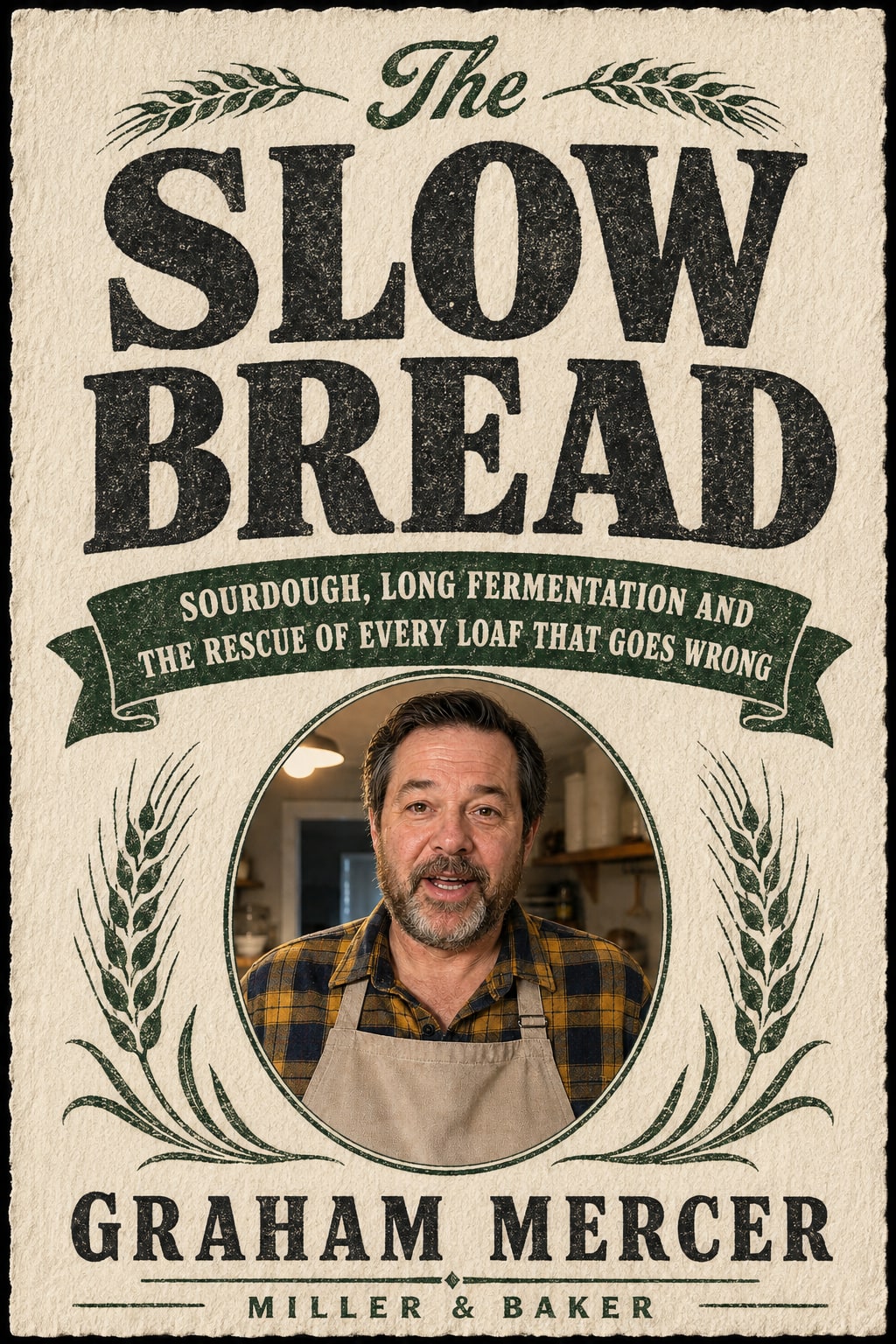
Slow Bread: Sourdough, Long Fermentation and the Rescue of Every Loaf That Goes Wrong

The books / 03

Slow Bread: Sourdough, Long Fermentation and the Rescue of Every Loaf That Goes Wrong

The Temperature-Led Sourdough Handbook

A cold proof is a flavour and scheduling choice, not a law: read temperature, rise and dough feel, then choose the bake your kitchen can carry.

This is the slow-work book for a baker ready to use sourdough without worshipping the clock. In 60 pages, “A Starter You Can Trust” builds a stiff culture over seven to ten days and judges it by repeatable rise, bubbles and a mild yogurt or vinegar smell—not the float test. “Ten Minutes in the Fridge” sets out weekly maintenance; “Temperature Owns the Clock” aims for 78°F (25.5°C) dough; and “Stop Bulk at the Right Rise” uses a marked sample and roughly 25 percent rise. Graham then compares flexible cold proofs, including a 72-hour flavour route, and rescues flat, gummy or over-fermented dough, including the loaf-pan fix.

Selected chapters

  1. A Starter You Can Trust
  2. Ten Minutes in the Fridge
  3. Temperature Owns the Clock
  4. Stop Bulk at the Right Rise
  5. Wet Dough, Strong Shape
  6. The Fridge Makes Room
  7. When the Grain Changes
  8. Heat, Steam, and the Crust

Selected chapters

Three ways into the bread shelf

The three books have separate jobs, so you can begin with the problem in front of you and still follow a clear path through the collection.

  1. Start with an honest yeasted loaf

    Open The $2 Loaf at “Four Ingredients, One Honest Loaf.” Weigh the 500-gram flour formula, use 2 grams of yeast, then practise the poke, windowpane and jiggle tests in “Read the Dough Before the Clock.”

  2. Read the bag before the shelf

    Use Don’t Buy That Bread when the question is whether a loaf or gadget earns its place. Start with the one-minute label method, then work through protein, ingredient count, net weight, cost per loaf and the free alternative to each tool.

  3. Give sourdough a clock you can read

    Turn to Slow Bread for a starter, a weekly refrigerator routine and a temperature-led fermentation plan. Aim for 78°F (25.5°C) dough, stop bulk near a 25 percent rise, and use the rescue chapter when the loaf goes flat, gummy or too far.

Before you buy

What these books will not do.

I would rather you know now than find out after you have paid.

  • They will not make bread fast. Ordinary yeasted bread takes about four hours from first mix to crackling crust, and the sourdough book is slower still. Your hands work for maybe fifteen minutes of that, but the clock is the clock.
  • They will not diagnose you. There are neutral sections on gluten, glyphosate, gut symptoms and glycemic index, and that is where I stop. I am a baker, not a medical authority.
  • They will not turn a bad oven into a good one. They will tell you how to work around yours, including trays, a roasting tin for steam, and an air fryer.
  • They will not sell you equipment. A bowl, a spoon or your hand, and an oven. For sourdough, one heavy lidded pot. Everything else in the gadget chapter is there so you can skip it.
  • There are no buyer reviews on this page yet. These books are new. When readers write to me, their words go here and not before.

Look inside

See the work before you buy

Open a page and read it. The samples lead into Graham's actual working chapters: ingredient tables, grams-and-cups formulas, clock plans, temperature targets, label verdicts, marked dough rises and fault tables. The point is not polished bakery theatre; it is evidence you can use at the bowl, shelf or oven.

The $2 Loaf: Real Bread From Ordinary Flour, No Gadgets, No Guesswork
The $2 Loaf: Real Bread From Ordinary Flour, No Gadgets, No Guesswork ↗
The $2 Loaf: Real Bread From Ordinary Flour, No Gadgets, No Guesswork
The $2 Loaf: Real Bread From Ordinary Flour, No Gadgets, No Guesswork ↗
Don't Buy That Bread: A Baker's Guide to Labels, Flour, Gadgets and What a Loaf Really Costs
Don't Buy That Bread: A Baker's Guide to Labels, Flour, Gadgets and What a Loaf Really Costs ↗
Don't Buy That Bread: A Baker's Guide to Labels, Flour, Gadgets and What a Loaf Really Costs
Don't Buy That Bread: A Baker's Guide to Labels, Flour, Gadgets and What a Loaf Really Costs ↗

What you get

Three books for the bread counter

The complete collection is three PDF ebooks: The $2 Loaf, Don’t Buy That Bread, and Slow Bread. Together they total 249 pages and move from ordinary yeasted bread, to label-reading and loaf cost, to sourdough, long fermentation and rescue work.

The $2 Loaf: Real Bread From Ordinary Flour, No Gadgets, No GuessworkDon't Buy That Bread: A Baker's Guide to Labels, Flour, Gadgets and What a Loaf Really CostsSlow Bread: Sourdough, Long Fermentation and the Rescue of Every Loaf That Goes Wrong

Your order

The Honest Bread Counter

$27

Three PDF ebooks: 93, 96 and 60 pages; 249 pages total

  • The $2 Loaf: Real Bread From Ordinary Flour, No Gadgets, No Guesswork · 93 · PDF
  • Don't Buy That Bread: A Baker's Guide to Labels, Flour, Gadgets and What a Loaf Really Costs · 96 · PDF
  • Slow Bread: Sourdough, Long Fermentation and the Rescue of Every Loaf That Goes Wrong · 60 · PDF
Get the books $27

Instant PDF download. 7-day money-back guarantee, no questions asked.

Graham Mercer

My guarantee

Read them for 7 days. If they are no use to you, I give the money back.

Use the support form within 7 days and you get every dollar back. You keep the PDFs. I would rather lose the sale than have you keep a book you do not need.

From the author

A baker who still listens for the crackle

I am Graham Mercer, 43, and I spent over twenty years behind the counter of the same corner bakery in my small town. I have hung up the apron, but my mornings still begin elbows-deep in flour, coaxing sourdough from the starter my grandfather first mixed in 1962. I measure time in proofing cycles and still stop to hear a crust crackle as a loaf cools.

I wrote these books because good bread should not require a specialty shelf or a cupboard full of gadgets. I read the comments on my videos carefully, listen to experienced bakers' feedback, and invite people to describe the failed loaf so I can find the responsible step. I am a baker, not a medical authority; the books stay with dough, labels, cost and practical kitchen decisions.

— Graham Mercer

This is for you if

Who I wrote this for

This is for you if

  • You want bread from ordinary flour, a bowl and an oven, and you are willing to judge dough by feel instead of obeying a rigid timetable.
  • You want a shopper's method for labels, protein, price per loaf and gadgets before spending on specialty ingredients or equipment.
  • You are ready to maintain a sourdough starter, read temperature and rise, and accept that cold proofing is optional rather than a rule.
  • You are happy to read PDF ebooks and keep a marked page beside the bowl.

A different starting point if

  • You want medical diagnosis, medication advice or diet claims; Graham stays in the lane of bread, labels and practical kitchen evidence.
  • You want a five-minute bake with no waiting; these books are honest about proofing cycles, fermentation and cooling time.

The Honest Bread Counter

Questions

Do I need to be an experienced baker?

No. The $2 Loaf starts with a bowl, spoon or hand, flour, water, salt, yeast and an oven. It explains grams and cups, dough feel, proofing cycles and the responsible step after a failed bake; experienced bakers can use the protein, temperature and scaling details to adjust.

What exactly is included, and in what format?

The collection contains three PDF ebooks: The $2 Loaf at 93 pages, Don’t Buy That Bread at 96 pages, and Slow Bread at 60 pages. Together, the three books total 249 pages.

Are the three books meant to be read in order?

Yes. The $2 Loaf: Trilogy is designed to be read in order: first make ordinary yeasted bread, then learn to assess labels, flour, costs and gadgets, then move into sourdough, long fermentation and rescue work.

Do I need a sourdough starter or specialist equipment?

The first book needs no starter, machine or specialist tool. Slow Bread builds a starter from flour and water; Graham considers a heavy lidded pot the only essential specialist tool for home sourdough, while also showing tray, roasting-tin steam and air-fryer alternatives.

Does Graham require a 16-hour cold proof?

No. Graham once found sixteen-hour cold proofing intimidating, then recognised it as flexible. Slow Bread treats cold proofing as an optional flavour and scheduling choice, with overnight, workday and longer 72-hour routes.

Does this provide medical or dietary advice?

No. Don’t Buy That Bread discusses label claims and includes neutral sections on gluten, glyphosate, gut symptoms and glycemic index, but Graham does not present himself as a medical authority. Do not change medication based on his videos.

Where can I find delivery and refund details?

Instant PDF download. 7-day money-back guarantee, no questions asked.

Put the next loaf on the bench

If you want a practical route from ordinary flour to a loaf you can read by feel, this is the shelf I would keep beside the oven. Start with the book that matches today's job, open a page, and get the dough moving.

Get the books $27

Instant PDF download. 7-day money-back guarantee, no questions asked.